OCD Explained
A compassionate, informative guide to Obsessive-Compulsive Disorder — covering all types, symptoms, treatments, stories, and coping strategies. You are not alone.
What is OCD?
Obsessive-Compulsive Disorder (OCD) is a mental health condition characterized by recurring, unwanted thoughts (obsessions) and repetitive behaviors (compulsions) a person feels driven to perform to reduce anxiety.
OCD affects about 2–3% of the global population. With proper treatment — primarily ERP therapy — most people see significant improvement.
OCD is not about being 'a little obsessive.' The thoughts are unwanted, distressing, and ego-dystonic — completely at odds with the person's true values and character.
Types of OCD
Click any card to read the full in-depth guide for that type.
Symptoms
OCD symptoms fall into obsessions and compulsions. Most people experience both.
Treatment
OCD is highly treatable. Most people respond well to ERP therapy and/or medication.
Tips & Coping
Personal Stories
Real experiences from people living with OCD. Names changed for privacy.
Community
Join the JourHelp Discord community for gentle peer support, shared experiences, and conversation.
No pressure. No judgment. Just JourHelp 🌸
FAQ
Could this be OCD?
A reflection tool — not a clinical diagnosis. Always speak to a professional.
Further Reading
Books, websites, apps, and organisations for OCD.
OCD Type Compare
Compare common themes, intrusive thoughts, triggers, and coping reminders across OCD subtypes.
Choose two types
Autism Explained
A friendly, compassionate guide to understanding autism — covering characteristics, strengths, sensory needs, diagnosis, support, and real experiences.
Start Here
Choose the path that fits this moment. You do not have to read everything in order.
Overwhelm First Aid
For moments when words, choices, noise, or touch feel like too much. This is not a crisis service, just a low-demand reset.
What is Autism?
Autism Spectrum Disorder (ASD) is a neurodevelopmental difference that affects how people perceive, process, and interact with the world. It is called a 'spectrum' because it presents differently in every person.
Autism is not a disease or something to be 'fixed.' It is a natural variation in human neurology. Autistic people may experience the world more intensely, process information differently, and have unique strengths alongside challenges.
About 1 in 36 children is diagnosed with autism. Many people are diagnosed in adulthood — especially women and people who mask their traits. A diagnosis, at any age, can be life-changing and clarifying.
Myths vs Reality
Old stereotypes make many autistic people feel invisible. These quick myth cards replace shame with clearer, kinder information.
Characteristics
Sensory Processing
Many autistic people experience sensory input differently — either hypersensitive or hyposensitive to various stimuli. This is not a choice; it is a neurological difference.
Sensory overload occurs when the brain receives more input than it can process, leading to overwhelm, shutdown, or meltdown. Creating sensory-friendly environments helps tremendously.
Daily Life & Energy
Autism is not only visible in big moments. It often shapes ordinary daily things: waking up, eating, planning, switching tasks, studying, working, travelling, socialising, and recovering afterwards.
Autism & Hygiene
Hygiene struggles are not moral failure. Showering, brushing teeth, hair care, skincare, laundry, and changing clothes can involve sensory pain, transitions, executive dysfunction, fatigue, and shame.
Communication & Social Differences
Autistic communication is not worse communication. It can be more direct, precise, honest, detailed, quiet, visual, written, or needs-based. Misunderstanding often happens when two communication styles are expected to work by only one set of social rules.
Autism in Women & Girls
Autism in women and girls is often missed, misunderstood, or diagnosed late. This does not mean it is 'milder.' It often means the person has learned to hide distress, copy social rules, and survive by masking.
Diagnosis & Masking
Autism can be diagnosed at any age. Early diagnosis allows for earlier support, but many people — especially women, girls, and those who mask — are diagnosed in adolescence or adulthood. A late diagnosis is never 'too late.'
Masking — hiding or suppressing autistic traits to fit neurotypical expectations — is especially common in women and girls. It is exhausting and can lead to burnout, anxiety, and depression.
Self-Diagnosis & Self-Recognition
JourHelp supports thoughtful, well-researched self-diagnosis. Many autistic people first recognise autism in themselves through extensive reading, community stories, screeners, diagnostic criteria, reflection on childhood, and comparing patterns across years of life. That process can be meaningful, careful, and deeply validating, especially when formal assessment is expensive, unavailable, unsafe, or shaped by outdated stereotypes.
Not everyone who relates to autism has a formal diagnosis, and that doesn’t make their experience any less real.
Self-Diagnosis Research Checklist
A careful self-diagnosis is usually a process, not a single moment. Use this checklist as a grounded research path.
Recent Autism Studies
A weekly refreshed reading list from PubMed. JourHelp highlights peer-reviewed research that supports understanding, accommodations, sensory needs, masking, burnout, diagnosis, communication, and quality of life.
Meltdowns, Shutdowns & Burnout
Overwhelm is often misunderstood from the outside. A meltdown, shutdown, or period of autistic burnout is not attention-seeking, laziness, or being dramatic. It is the nervous system reaching a limit.
Autistic Burnout Guide
Autistic burnout is more than being tired. It often follows long periods of masking, sensory overload, social pressure, and living without enough real recovery.
Across Life Stages
Autism can look different across childhood, teenage years, adulthood, parenthood, study, work, relationships, and ageing. Support should grow with the person instead of freezing them in one stereotype.
Support & Accommodations
The best support starts with listening, accepting, and asking what the person needs — not assuming.
Autism Support Tools
Private, simple tools to turn self-knowledge into something practical you can use or share.
Words & Request Tools
For moments when you know what you need, but finding the words is the hard part.
Late-Identified Autism
Finding out later can rearrange your whole life story. Relief, grief, anger, tenderness, and confusion can all exist together.
Autism in Relationships
Autistic people can love deeply. Relationships often work best when needs are made explicit instead of guessed.
School & Work Accommodations
Accommodations are not special treatment. They reduce unnecessary barriers so someone can use their actual skills.
For Parents, Partners & Friends
Support is not about making someone less autistic. It is about making life safer, clearer, and more workable.
Supporter Mistakes to Avoid
Most people mean well. These common responses can still hurt, shame, or increase overload.
Autism + OCD, ADHD & Anxiety
Autism often overlaps with other neurodivergent or mental health experiences. Understanding the overlap can prevent shame and misdiagnosis.
Autism, Trauma & Being Misunderstood
Many autistic people carry pain from being punished, dismissed, bullied, or treated as difficult for needs they could not explain yet.
Autistic Joy
Autism is not only challenge. Autistic joy, focus, honesty, sensory delight, and deep interest are real parts of autistic life.
Special Interests
Special interests are not 'too much.' They can be regulation, identity, learning, joy, connection, and a place where the nervous system finally gets to breathe.
Autism Mini Glossary
You Might Be Autistic If...
Not a diagnosis, just gentle reflection prompts. If many feel familiar, it may be worth exploring further.
Self-Care Tips
Personal Stories
Real experiences from autistic people. Names changed for privacy.
Community
Join the JourHelp Discord community for gentle peer support, shared experiences, and conversation.
No pressure. No judgment. Just JourHelp 🌸
FAQ
Could I be autistic?
A reflection tool to help you explore. Not a diagnosis — always consult a professional.
Autism Resources
Books, websites, apps, and communities for autistic people and their loved ones.
Supporter View
Gentle guidance for parents, partners, friends, teachers, and anyone trying to support without adding pressure.
What helps
What to avoid
Autism, OCD & Anxiety
A careful comparison for patterns that can look similar from the outside but may need different support.
Common mix-ups
My Toolbox
Your saved JourHelp pages and private support tools in one place. Local saving is optional and stays on this device.
Saved pages
Save any guide, tool, or section so you can return when your brain is not in search mode.
Calm Plan
Autism support tools
My Calm Plan
A gentle support card for overwhelming moments. Saving is optional and only happens if you allow local storage.
Build your support card
Fill in whatever feels useful. This is not a medical or crisis safety plan, but it can help you explain what supports you when words are hard.
If local storage is declined, your plan stays only on this page until refresh or close.
Support card preview
Glossary
Short, gentle explanations of common OCD, autism, and mental health terms.
Find a term
Disclaimer
JourHelp shares personal insights and general information about autism and OCD. It is not a substitute for professional medical or psychological advice.
Extended Disclaimer
The information on JourHelp is shared for awareness, reflection, and education. It is based on personal insights and general information about autism, OCD, mental health, coping strategies, and support options.
JourHelp does not provide medical, psychological, therapeutic, diagnostic, or crisis-care services. Nothing on this website should be used to diagnose yourself or someone else, start or stop treatment, change medication, or replace guidance from a qualified professional.
Autism and OCD can look different for every person. If something you read here feels familiar, confusing, upsetting, or urgent, please speak with a doctor, psychologist, therapist, psychiatrist, or another qualified mental health professional.
When to Get Support
- If you are in immediate danger, feel unable to stay safe, or are worried you may harm yourself or someone else, contact local emergency services now.
- If you are experiencing intense distress, panic, suicidal thoughts, compulsions that feel unmanageable, or a major change in your mental health, seek professional support as soon as possible.
- If you are already receiving care, use JourHelp only as extra reflection material alongside the plan you have made with your professional support team.
About Julie Janssen
JourHelp was created by Julie Janssen, a software development student in Eindhoven with a love for calm support, clear information, and gentle digital spaces.
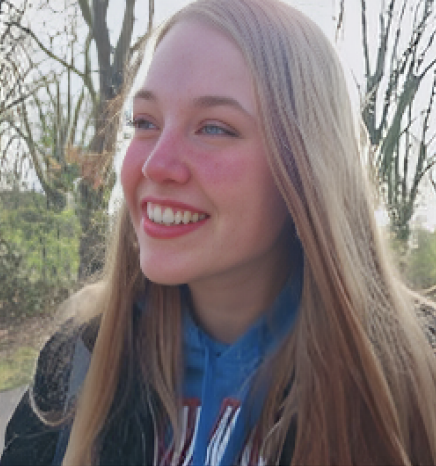
Who I am
My name is Julie Janssen. I study software development at SintLucas in Eindhoven and I am interested in web development, game development, mental health awareness, and autism support.
I have always experienced the world a little differently. After professional assessment, I was diagnosed with an unspecified neurodevelopmental condition. Many of my traits closely align with autism. While I do not hold a formal autism diagnosis due to strict diagnostic criteria around early childhood documentation, I deeply relate to autistic experiences. This perspective plays an important role in how I understand and support others, and is reflected in the work I create through JourHelp.
Outside of coding, I enjoy writing stories, listening to music, and connecting with people. I care about making information feel less cold, less overwhelming, and easier to start with.
Why I made JourHelp
JourHelp is my website for calm, personal information about OCD, autism, and neurodevelopmental experiences. I created it because, for a long time, I did not feel like my neurodivergent experience was understood. I often felt different, like I did not fully belong. Learning about autism changed my life, and I wanted to create something that could help at least one person feel less alone.
I wanted a place where OCD, autism, and support needs could be explained in a calm, personal, and respectful way. My goal is not to replace professional care, but to help people find language, recognition, and a softer place to begin.
I base my work on both personal experience and ongoing research into psychology and neurodivergence.
Autism is especially close to the heart of JourHelp. I want this site to support people who are diagnosed, questioning, self-recognizing after extensive research, late-identified, masking, burned out, or simply trying to understand themselves better.